2. Simple Science
For any two of us to communicate with one another, we must share a certain amount of common reality. As a result, our nervous systems must be virtually identical in their ability to perceive information from the external world, process and integrate that information in our brains, and then have similar systems of output including thought, word, or deed.
The emergence of life was a most remarkable event. With the advent of the single-celled organism, a new era of information processing was born at the molecular level. Through the manipulation of atoms and molecules into DNA and RNA sequences, information could be entered, coded, and stored for future use. Moments in time no longer came and went without a record and, by interweaving a continuum of sequential moments into a common thread, the life of the cell evolved as a bridge across time . Before long, cells figured out ways of hanging together and working together, which finally produced you and me.
According to the American Heritage Dictionary, to evolve biologically means "to develop by evolutionary processes from a primitive to a more highly organized form. " [1]
Earth's molecular brain of DNA is a powerful and successful genetic program - not only because it adapts to constant change, but also because it expects, appreciates, and takes advantage of opportunities to transform itself into something even more magnificent. It is perhaps of interest that our human genetic code is constructed by the exact same four nucleotides (complex molecules) as every other form of life on the planet. At the level of our DNA, we are related to the birds, reptiles, amphibians, other mammals, and even the plant life. From a purely biological perspective, we human beings are our own species-specific mutation of earth's genetic possibility.
As much as we would like to think that human life has attained biological perfection, despite our sophisticated design, we do not represent a finished and/ or perfect genetic code. The human brain exists in an ongoing state of change. Even the brains of our ancestors of 2000 or 4000 years ago do not look identical to the brains of man today. The development of language, for example, has altered our brains' anatomical structure and cellular networks.
Most of the different types of cells in our body die and are replaced every few weeks or months. However, neurons, the primary cell of the nervous system, do not multiply (for the most part) after we are born. That means that the majority of the neurons in your brain today are as old as you are. This longevity of the neurons partially accounts for why we feel pretty much the same on the inside at the age of 10 as we do at age 30 or 77. The cells in our brain are the same but over time their connections change based upon their/our experience.
The human nervous system is a wonderfully dynamic entity composed of an estimated one trillion cells. To give you some appreciation for how enormous one trillion is, consider this: there are approximately six billion people on the planet and we would have to multiply all six billion people 166 times just to make up the number of cells combining to create a single nervous system!
Of course, our body is much more than a nervous system. In fact, the typical adult human body is composed of approximately fifty trillion cells. That would be 8,333 times all of the six billion people on the planet! What's amazing is that this huge conglomeration of bone cells, muscle cells, connective tissue cells, sensory cells, etc. tend to get along and work together to generate perfect health.
Biological evolution generally occurs from a state of lesser complexity to a state of greater complexity. Nature ensures her own efficiency by not reinventing the wheel with every new species she creates. Generally, once nature identifies a pattern in the genetic code that works toward the survival of the creature, like a blossom for nectar transmission, a heart to pump blood, a sweat gland to help regulate body temperature or an eyeball for vision, she tends to build that feature into future permutations of that specific code. By adding a new level of programming on top of an already well-established set of instructions, each new species contains a strong foundation of time-tested DNA sequences. This is one of the simple ways through which nature transmits the experience and wisdom bestowed by ancient life to her progeny.
Another advantage to this type of build-on-top-of-what-alreadyworks genetic engineering strategy is that very small manipulations of the genetic sequences can result in major evolutionary transformations. In our own genetic profile, believe it or not, scientific evidence indicates that we humans share 99.4% of our total DNA sequences with the chimpanzee. [2]
This does not mean, of course, that humans are direct descendants from our tree-swinging friends, but it does emphasize that the genius of our molecular code is supported by eons of nature's greatest evolutionary effort. Our human code was not a random act, at least not in its entirety, but rather is better construed as nature's ever-evolving quest for a body of genetic perfection.
As members of the same human species, you and I share all but 0.01% (1/100th of 1%) of identical genetic sequences. So biologically, as a species, you and I are virtually identical to one another at the level of our genes (99.99%). Looking around at the diversity within our human race, it is obvious that 0.01% accounts for a significant difference in how we look, think, and behave.
The portion of our brain that separates us from all other mammals is the outer undulated and convoluted cerebral cortex. Although other mammals do have a cerebral cortex, the human cortex has approximately twice the thickness and is believed to have twice the function. Our cerebral cortex is divided into two major hemispheres, which complement one another in function. (Note: All of the pictures in this book have the front of the brain directed to the left).
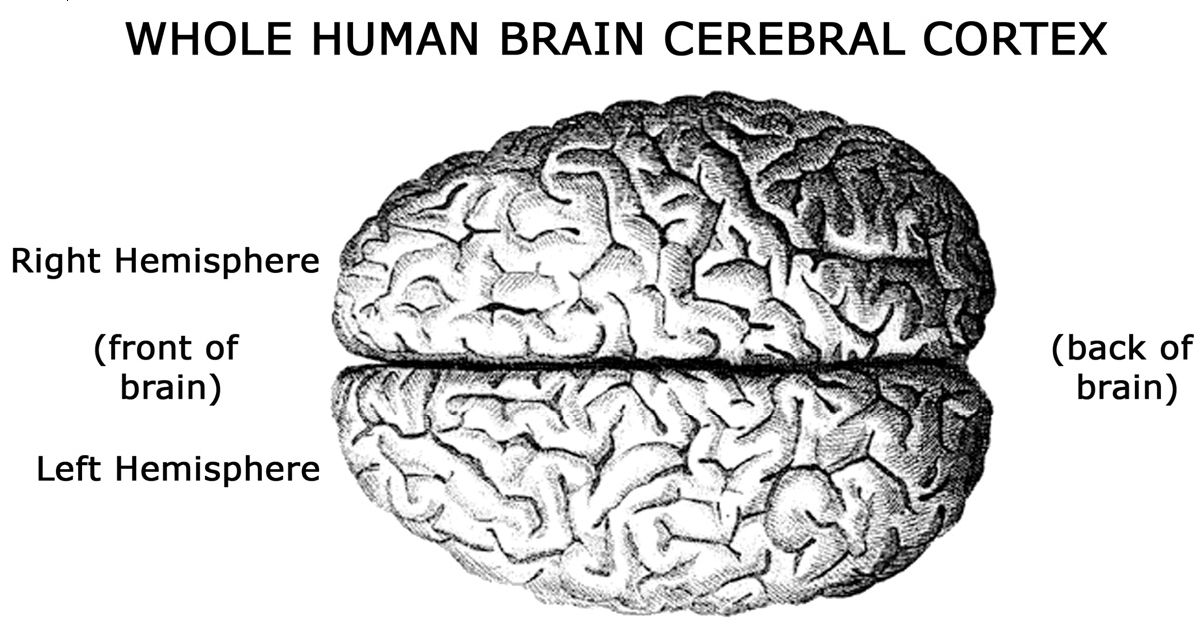
Right Hemisphere: Chỉ vào nửa trên của bộ não (Bán cầu não phải). Left Hemisphere: Chỉ vào nửa dưới của bộ não (Bán cầu não trái). (front of brain): Nằm ở phía bên trái của hình ảnh, chỉ mặt trước của não. (back of brain): Nằm ở phía bên phải của hình ảnh, chỉ mặt sau của não.
The two hemispheres communicate with one another through the highway for information transfer, the corpus callosum. Although each hemisphere is unique in the specific types of information it processes, when the two hemispheres are connected to one another, they work together to generate a single seamless perception of the world.
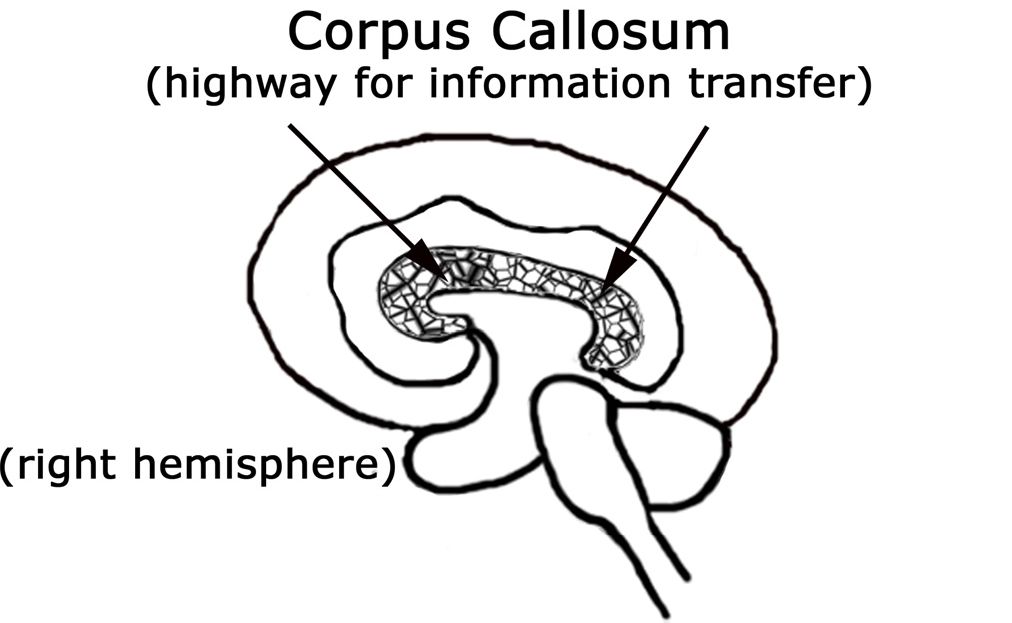
Corpus Callosum (highway for information transfer) (đường cao tốc truyền tải thông tin) right hemisphere: bán cầu não phải
When it comes to the intricate microscopic anatomy of how our cerebral cortices are finely wired, variation is the rule, not the exception. This variation contributes to our individual preferences and personalities. However, the gross (or macroscopic) anatomy of our brains is quite consistent and your brain looks very similar to mine. The bumps (gyri) and grooves (sulci) of the cerebral cortex are specifically organized such that our brains are virtually identical in appearance, structure, and function. For example, each of our cerebral hemispheres contain a superior temporal gyrus, pre-and postcentral gyri, a superior parietal gyrus, along with a lateral occipital gyrus - just to mention a few. Each of these gyri are made up of very specific groups of cells that have very specific connections and functions.
For instance, the cells of the postcentral gyrus enable us to be consciously aware of sensory stimulation, while the cells in the precentral gyrus control our ability to voluntarily move our body parts. The major pathways for information transfer between the various cortical groups of cells (fiber tracts) within each of the two hemispheres are also consistent between us and, as a result, we are generally capable of thinking and feeling in comparable ways.
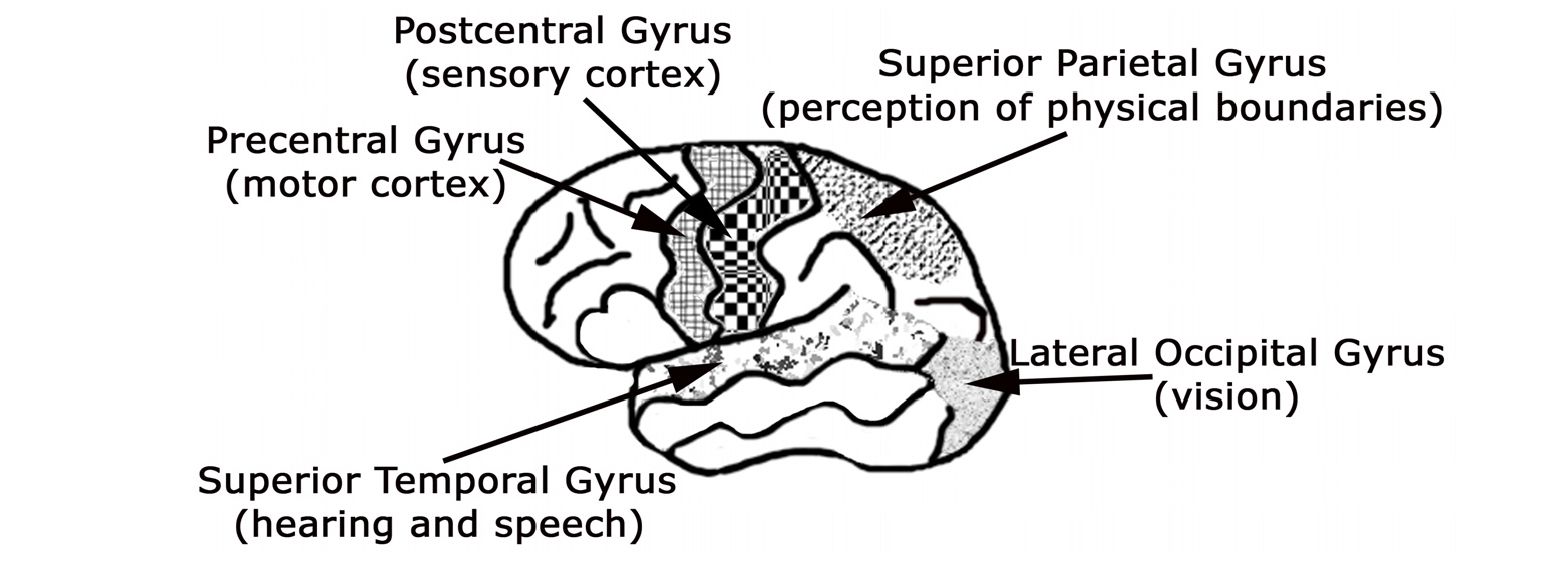
Postcentral Gyrus (sensory cortex): Vùng não được đánh dấu bằng họa tiết caro đen trắng, có chức năng vỏ não cảm giác.
Precentral Gyrus (motor cortex): Vùng não được đánh dấu bằng họa tiết sọc ngang, có chức năng vỏ não vận động.
Superior Parietal Gyrus (perception of physical boundaries): Vùng não được đánh dấu bằng họa tiết chấm nhỏ, có chức năng nhận thức ranh giới vật lý.
Lateral Occipital Gyrus (vision): Vùng não được đánh dấu bằng họa tiết các đốm lớn nhỏ, có chức năng thị giác.
Superior Temporal Gyrus (hearing and speech): Vùng não được đánh dấu bằng họa tiết hạt, có chức năng nghe và nói.
The blood vessels supplying nutrients to our cerebral hemispheres also display a defined pattern. The anterior, middle, and posterior cerebral arteries supply blood to each of the two hemispheres. Damage to any specific branch of one of these major arteries may result in somewhat predictable symptoms of severe impairment or complete elimination of our ability to perform specific cognitive functions. (Of course there are unique differences between damage to the right and left hemispheres.) The following illustration shows the territory of the middle cerebral artery of the left hemisphere, and this includes the location of my stroke. Damage to any of the middle cerebral artery's primary branches would result in relatively predictable symptoms no matter who was having the problem.
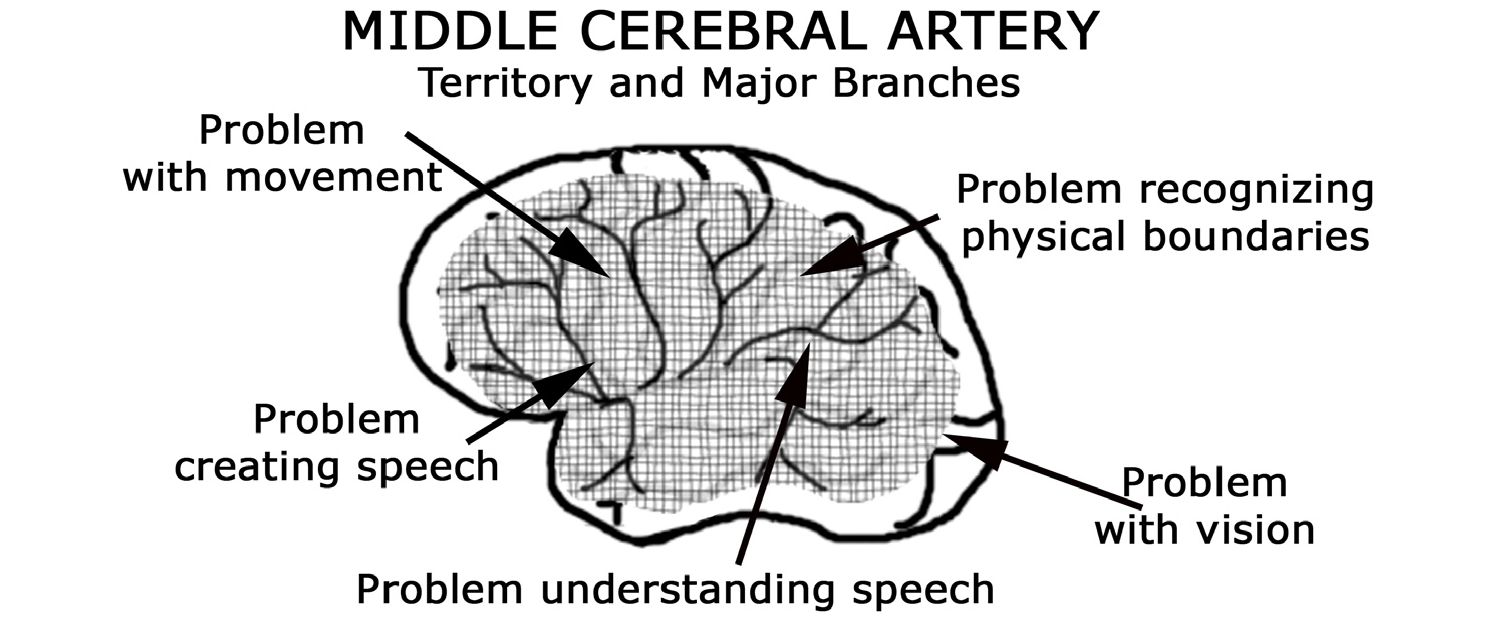
MIDDLE CEREBRAL ARTERY: ĐỘNG MẠCH NÃO GIỮA
Territory and Major Branches: Vùng cấp máu và các nhánh chính
Problem with movement: Vấn đề về cử động (Chỉ vùng não liên quan đến chức năng vận động).
Problem creating speech: Vấn đề tạo ra lời nói (Chỉ vùng não Broca, liên quan đến sản xuất ngôn ngữ).
Problem understanding speech: Vấn đề hiểu lời nói (Chỉ vùng não Wernicke, liên quan đến việc hiểu ngôn ngữ).
Problem recognizing physical boundaries: Vấn đề nhận diện ranh giới vật lý (Chỉ vùng não liên quan đến nhận thức không gian và ranh giới cơ thể).
Problem with vision: Vấn đề về thị lực (Chỉ vùng não liên quan đến xử lý thông tin thị giác).
The superficial layers of the cortex, which we see when we look at the external surface of the brain, are filled with neurons that we believe to be uniquely human. These most recently "added on" neurons create circuits that manufacture our ability to think linearly - as in complex language and the ability to think in abstract, symbolic systems like mathematics. The deeper layers of the cerebral cortex make up the cells of the limbic system. These are the cortical cells we share with other mammals.
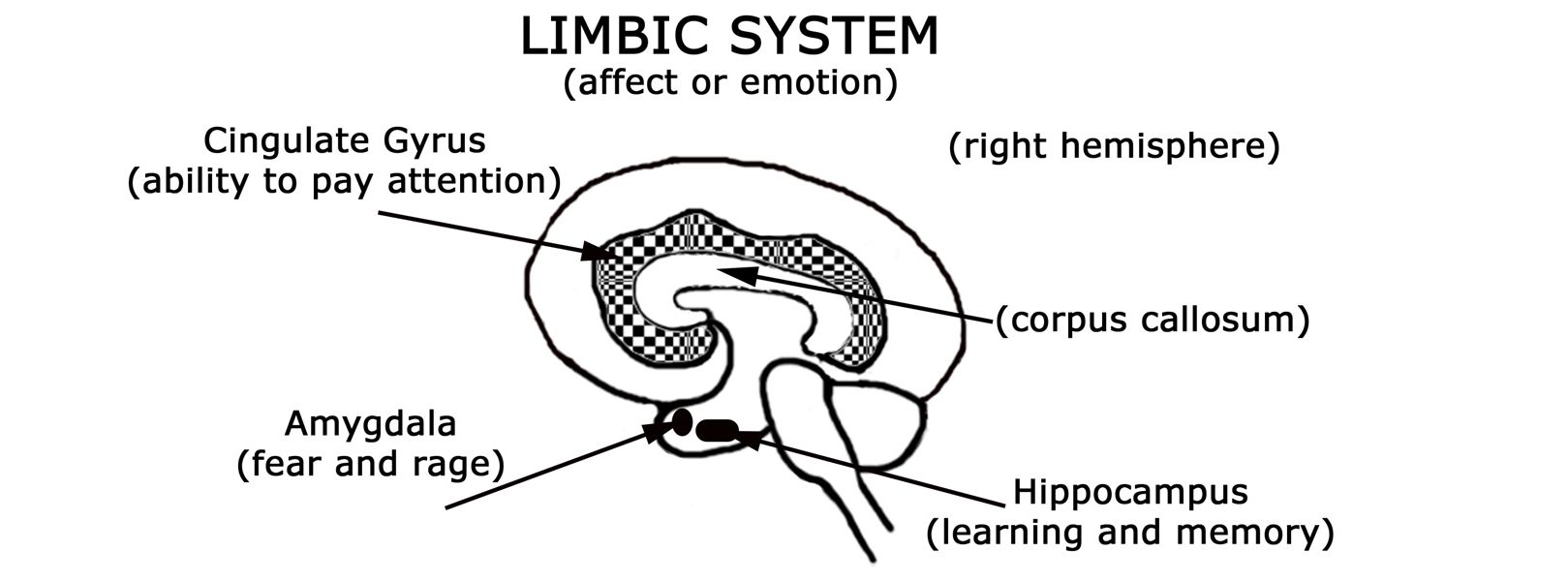
LIMBIC SYSTEM: HỆ THỐNG LIMBIC (affect or emotion): (cảm xúc hoặc tình cảm) Cingulate Gyrus: Hồi đai (ability to pay attention): (khả năng chú ý) (right hemisphere): (bán cầu não phải) (corpus callosum): (thể chai) - cấu trúc kết nối hai bán cầu não, giúp truyền thông tin giữa chúng. Amygdala: Hạch hạnh nhân (fear and rage): (sợ hãi và giận dữ) Hippocampus: Hồi hải mã (learning and memory): (học tập và trí nhớ)
The limbic system functions by placing an affect, or emotion, on information streaming in through our senses. Because we share these structures with other creatures, the limbic system cells are often referred to as the "reptilian brain" or the "emotional brain." When we are newborns, these cells become wired together in response to sensory stimulation. It is interesting to note that although our limbic system functions throughout our lifetime, it does not mature. As a result, when our emotional "buttons" are pushed, we retain the ability to react to incoming stimulation as though we were a two year old, even when we are adults.
As our higher cortical cells mature and become integrated in complex networks with other neurons, we gain the ability to take "new pictures" of the present moment. When we compare the new information of our thinking mind with the automatic reactivity of our limbic mind, we can reevaluate the current situation and purposely choose a more mature response.
It might be of interest to note that all of today's "brain based learning" techniques used in elementary through high school capitalize on what neuroscientists understand about the functions of the limbic system. With these learning techniques, we try to transform our classrooms into environments that feel safe and familiar. The objective is to create an environment where the brain's fear/rage response (amygdala) is not triggered. The primary job of the amygdala is to scan all incoming stimulation in this immediate moment and determine the level of safety. One of the jobs of the cingulate gyrus of the limbic system is to focus the brain's attention.
When incoming stimulation is perceived as familiar, the amygdala is calm and the adjacently positioned hippocampus is capable of learning and memorizing new information. However, as soon as the amygdala is triggered by unfamiliar or perhaps threatening stimulation, it raises the brain's level of anxiety and focuses the mind's attention on the immediate situation. Under these circumstances, our attention is shifted away from the hippocampus and focused toward self-preserving behavior about the present moment.
Sensory information streams in through our sensory systems and is immediately processed through our limbic system. By the time a message reaches our cerebral cortex for higher thinking, we have already placed a "feeling" upon how we view that stimulation - is this pain or is this pleasure? Although many of us may think of ourselves as thinkingcreatures that feel, biologically we are feeling creatures that think .
Because the term "feeling" is broadly used, I'd like to clarify where different experiences occur in our brain. First, when we experience feelings of sadness, joy, anger, frustration, or excitement, these are emotions that are generated by the cells of our limbic system. Second, to feel something in your hands refers to the tactile or kinesthetic experience of feeling through the action of palpation. This type of feeling occurs via the sensory system of touch and involves the postcentral gyrus of the cerebral cortex. Finally, when someone contrasts what he or she feels intuitively about something (often expressed as a "gut feeling") to what they think about it, this insightful awareness is a higher cognition that is grounded in the right hemisphere of the cerebral cortex. (In Chapter Three we will discuss more thoroughly the different ways in which the right and left cerebral hemispheres operate.)
As information processing machines, our ability to process data about the external world begins at the level of sensory perception. Although most of us are rarely aware of it, our sensory receptors are designed to detect information at the energy level. Because everything around us - the air we breathe, even the materials we use to build with, are composed of spinning and vibrating atomic particles, you and I are literally swimming in a turbulent sea of electromagnetic fields. We are part of it. We are enveloped within it, and through our sensory apparatus we experience what is.
Each of our sensory systems is made up of a complex cascade of neurons that process the incoming neural code from the level of the receptor to specific areas within the brain. Each group of cells along the cascade alters or enhances the code, and passes it on to the next set of cells in the system, which further defines and refines the message. By the time the code reaches the outermost portion of our brain, the higher levels of the cerebral cortex, we become conscious of the stimulation. However, if any of the cells along the pathway fail in their ability to function normally, then the final perception is skewed away from normal reality.
Our visual field, the entire view of what we can see when we look out into the world, is divided into billions of tiny spots or pixels. Each pixel is filled with atoms and molecules that are in vibration. The retinal cells in the back of our eyes detect the movement of those atomic particles. Atoms vibrating at different frequencies emit different wavelengths of energy, and this information is eventu coded as different colors by the visual cortex in the occi region of our brain. A visual image is built by our br ability to package groups of pixels together in the form edges. Different edges with different orientations - vert horizontal, and oblique, combine to form complex ima Different groups of cells in our brain add depth, color, motion to what we see. Dyslexia, whereby some wr letters are perceived in reverse from normal, is a g example of a functional abnormality that can occur when normal cascade of sensory input is altered.
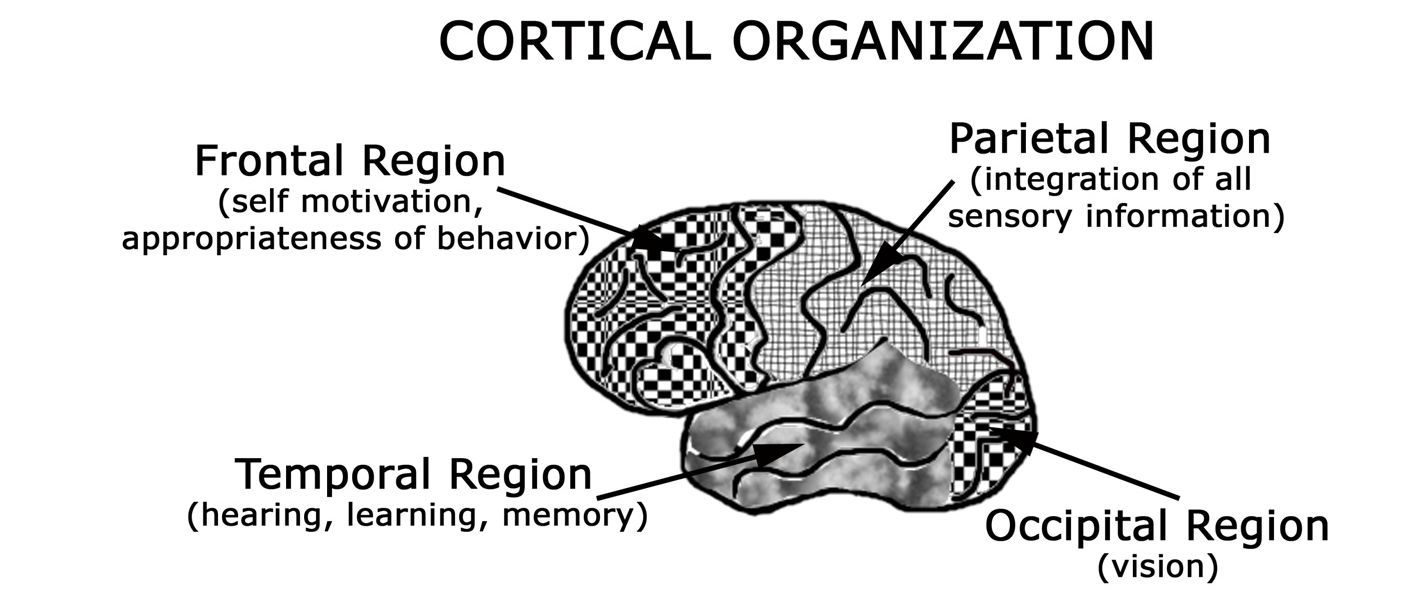
CORTICAL ORGANIZATION: TỔ CHỨC VỎ NÃO Frontal Region: Vùng trán (self motivation, appropriateness of behavior): (động lực bản thân, sự phù hợp của hành vi) Parietal Region: Vùng đỉnh (integration of all sensory information): (tích hợp tất cả thông tin cảm giác) Temporal Region: Vùng thái dương (hearing, learning, memory): (nghe, học tập, trí nhớ) Occipital Region: Vùng chẩm (vision): (thị giác)
Similar to vision, our ability to hear sound also depends upon our detection of energy traveling at different wavelengths.
Sound is the product of atomic particles in space colliding with one another and emitting patterns of energy. The energy wavelengths, created by the bombarding particles, beat upon the tympanic membrane in our ear. Different wavelengths of sound vibrate our eardrum with unique properties. Similar to our retinal cells, the hair cells of our auditory Organ of Corti translate this energy vibration in our ear into a neural code. This eventually reaches the auditory cortex (in the temporal region of our brain) and we hear sound.
Our most obvious abilities to sense atomic/molecular information occur through our chemical senses of smell and taste. Although these receptors are sensitive to individual electromagnetic particles as they waft past our nose or titillate our taste buds, we are all unique in how much stimulation is required before we can smell or taste something. Each of these sensory systems is also made up of a complex cascade of cells, and damage to any portion of the system may result in an abnormal ability to perceive.
Finally, our skin is our largest sensory organ, and it is stippled with very specific sensory receptors designed to experience pressure, vibration, light touch, pain, or temperature. These receptors are precise in the type of stimulation they perceive such that only cold stimulation can be perceived by cold sensory receptors and only vibration can be detected by vibration receptors. Because of this specificity, our skin is a finely mapped surface of sensory reception.
The innate differences we each experience in terms of how sensitive we are to different types of stimulation contribute greatly to how we perceive the world. If we have problems hearing when people speak, then we will hear only bits and pieces of conversation and make decisions and judgments based upon minimal information. If our eyesight is poor, then we will focus on fewer details and our interaction with the world will be affected. If our sense of smell is deficient, then we may not be able to discriminate between a safe environment and a health hazard, rendering us more vulnerable. At the opposite extreme, if we are oversensitive to stimulation, we may avoid interacting with our environment and miss out on life's simple pleasures.
Pathology and disease of the mammalian nervous system generally involves the brain tissue that distinguishes that specific species from other species. Consequently, in the case of the human system, the outer layers of our cerebral cortex are often vulnerable to disease. Stroke is the number one disabler in our society and the number three killer.
Because neurological disease often involves the higher cognition layers of our cerebral cortex, and because stroke occurs four times more frequently in the left cerebral hemisphere, our ability to create or understand language is often compromised. The term stroke refers to a problem with the blood vessels carrying oxygen to the cells of the brain, and there are basically two types: ischemic (ih-skee-mik) and hemorrhagic (hem-o-radg-ik).
According to the American Stroke Association, the ischemic stroke accounts for approximately 83% of all strokes. Arteries carry blood into the brain and their shape tapers smaller and smaller as they travel farther away from the heart. These arteries carry life-supporting oxygen necessary for cells, including neurons, to survive. With ischemic stroke, a blood clot travels into the artery until the tapered diameter of the artery becomes too small for the clot to pass any farther. The blood clot blocks the flow of oxygen-rich blood to the cells beyond the point of obstruction. Consequently, brain cells become traumatized and often die. Since neurons generally do not regenerate, the dead neurons are not replaced. The function of the deceased cells may be lost permanently, unless other neurons adapt over time to carry out their function. Because every brain is unique in its neurological wiring, every brain is unique in its ability to recover from trauma.
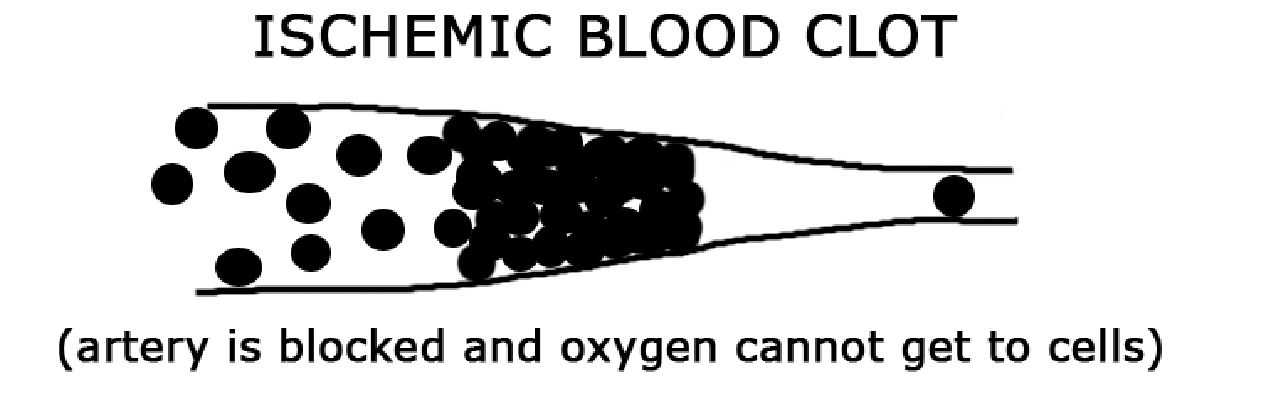
ISCHEMIC BLOOD CLOT: CỤC MÁU ĐÔNG GÂY THIẾU MÁU CỤC BỘ (hay Huyết khối tắc mạch thiếu máu cục bộ) (artery is blocked and oxygen cannot get to cells): (động mạch bị tắc nghẽn và oxy không thể đến được các tế bào)
The hemorrhagic stroke occurs when blood escapes from the arteries and floods into the brain. Seventeen percent of all strokes are hemorrhagic. Blood is toxic to neurons when it comes in direct contact with them, so any leak or
vascular blowout can have devastating effects on the brain. One form of stroke, the aneurysm (an-yu-rism), forms when there is a weakening in the wall of a blood vessel that consequently balloons out. The weakened area fills with blood and can readily rupture, spewing large volumes of blood into the skull. Any type of hemorrhage is often life threatening.
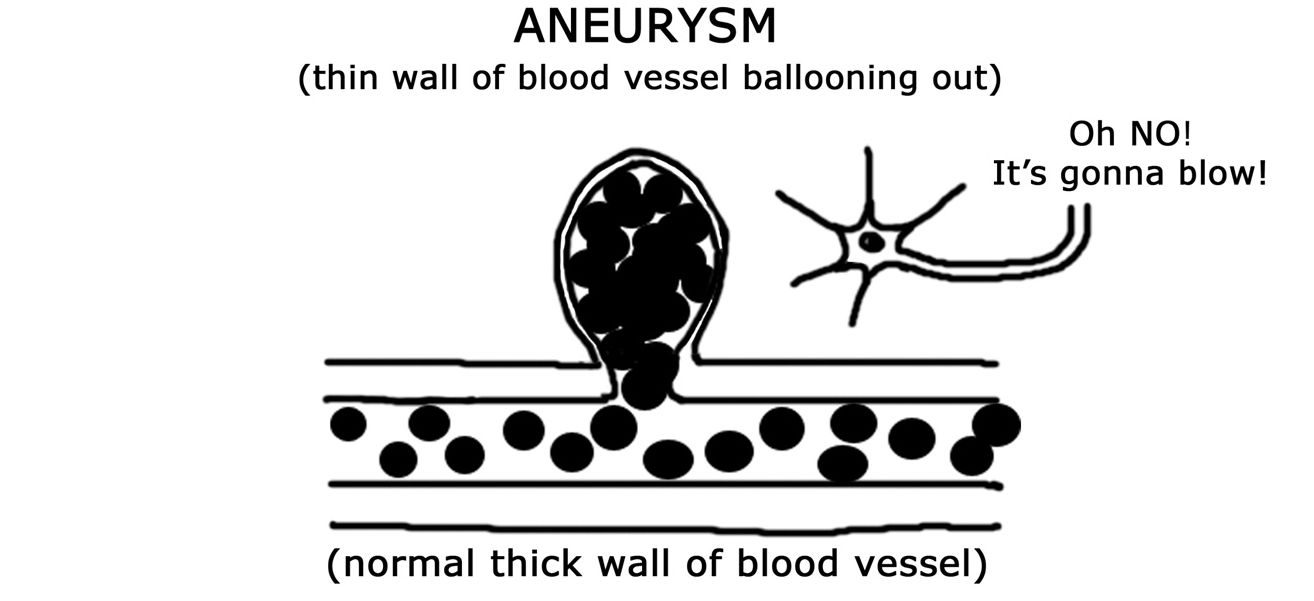
ANEURYSM: PHÌNH MẠCH (thin wall of blood vessel ballooning out): (thành mạch máu mỏng bị phình ra) Oh NO! It's gonna blow!: Ối KHÔNG! Nó sắp vỡ rồi! (Lời cảnh báo về nguy cơ vỡ phình mạch). (normal thick wall of blood vessel): (thành mạch máu dày bình thường)
An arteriovenous malformation (AVM) is a rare form of hemorrhagic stroke. It is a congenital disorder whereby an individual is born with an abnormal arterial configuration. Normally, the heart pumps blood through arteries with high pressure while blood is retrieved through veins, which are low pressure. A capillary bed acts as a buffering system or neutral zone between the high-pressure arteries and the low-pressure veins.
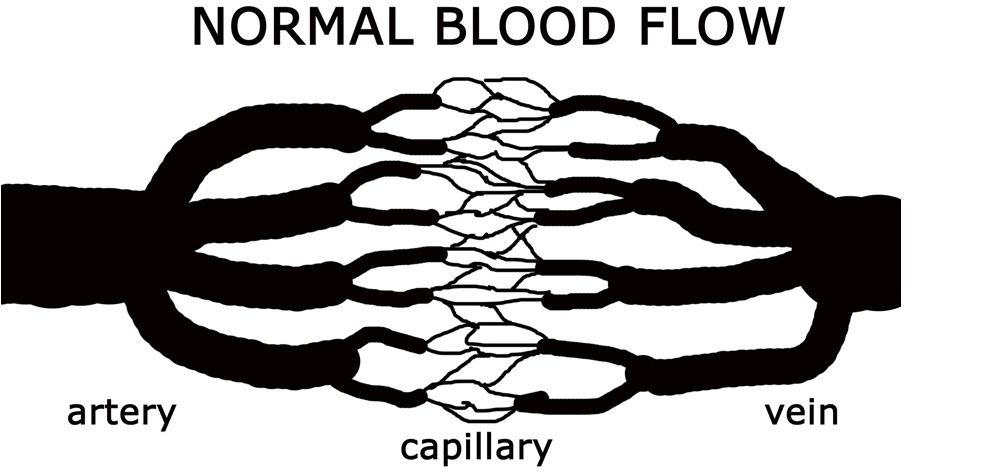
NORMAL BLOOD FLOW: LƯU LƯỢNG MÁU BÌNH THƯỜNG artery: động mạch (Mạch máu mang máu giàu oxy từ tim đi nuôi cơ thể) capillary: mao mạch (Các mạch máu nhỏ nhất, nơi diễn ra sự trao đổi chất giữa máu và tế bào) vein: tĩnh mạch (Mạch máu mang máu đã khử oxy trở về tim)
In the case of the AVM, an artery is directly connected to a vein with no buffering capillary bed in between. Over time, the vein can no longer handle the high pressure from
the artery and the connection between the artery and vein is broken spilling blood into the brain. Although the AVM accounts for only 2% of all hemorrhagic strokes, [3] it is the most common form of stroke that strikes people during their prime years of life (ages 25-45). I was 37 when my AVM blew.
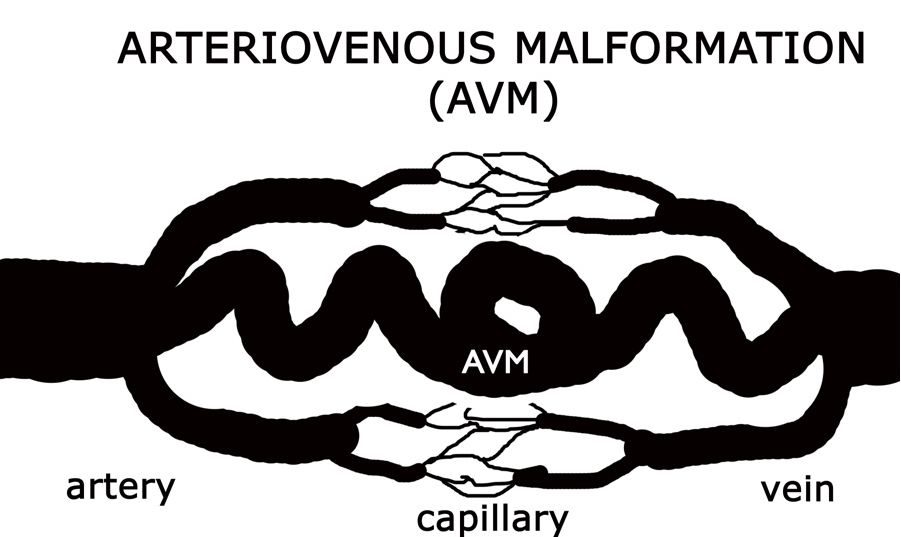
ARTERIOVENOUS MALFORMATION (AVM): DỊ DẠNG ĐỘNG TĨNH MẠCH (AVM) Giải thích: Đây là một tình trạng bẩm sinh trong đó có một kết nối bất thường giữa động mạch và tĩnh mạch, bỏ qua mạng lưới mao mạch thông thường. AVM: Dị dạng động tĩnh mạch (viết tắt của Arteriovenous Malformation), chỉ phần dị dạng trong hình. artery: động mạch capillary: mao mạch vein: tĩnh mạch
Regardless of the mechanical nature of the vascular problem, be it a blood clot or a hemorrhage, no two strokes are identical in their symptoms because no two brains are absolutely identical in their structure, connections or ability to recover. At the same time, it is impossible to talk about the symptoms resulting from stroke without having a conversation about the innate differences between the right and left cerebral hemispheres. Although the anatomical structure of the two hemispheres is relatively symmetrical, they are quite diverse in not only how they process information, but also in the types of information they process.
The better we understand the functional organization of the two cerebral hemispheres, the easier it is to predict what deficits might occur when specific areas are damaged. Perhaps more important, we might gain some insight into what we can do to help stroke survivors recover lost function.
WARNING SIGNS OF STROKE
S = SPEECH, or any problems with language
T = TINGLING, or any numbness in the body
R = REMEMBER, or any problems with memory
O = OFF BALANCE, problems with coordination
K = KILLER HEADACHE
E = EYES, or any problems with vision
STROKE is a medical emergency. Call 9-1-1
[1]: Second College Edition (Boston: Houghton Mifflin Company, 1985)
[2]: Derek E. Wildman, et.al., Center for Molecular Medicine and Genetics Department of Anatomy and Cell Biology, Wayne State University School of Medicine (Accessed September 10, 2006), http://www.pnas.org/cgi/content/full/100/12/7181
[3]: National Institute of Neurological Disorders and Stroke (Accessed September 10, 2006), http://www.ninds.nih.gov